More Sure than Sunrise

This morning, as I went through my usual routine, I noticed something written on the bottle of my face wash: “targets 100% of daily pollution.” It caught my eye, but not for the reason the marketing team probably intended. I paused and thought, “That phrase actually means nothing.”

Sure, it targets 100%—but does it actually hit 100%? “Targeting” doesn’t guarantee success. It doesn’t even necessarily imply effort. I can target anything all day long and never come close to actually hitting it. I’m sure when I bought that face wash, I read the label and thought, “Oh okay, 100%,” trusted it blindly and moved on without a second thought. We’ve gotten so used to empty phrases that we barely notice them anymore.

I thought about that phrase through the morning. Later, as I tossed a load of laundry into the washer, I realized that I don’t even question whether the clothes will come out clean. I trust that the detergent will do its job. I don’t second-guess the rinse cycle. I just press “start” and walk away in full confidence that it’s going to work. Again, I wondered: what else do I trust in blindly?

It’s a silly question at first glance, but really… do I have more immediate confidence in man-made systems and mass-produced products than I do in the very words of God?

In our world, we’re constantly bombarded by words that sound important but lack substance. Commercials, slogans, political speeches, even everyday conversations—so much of what we hear is padded with fluff and exaggeration. Our culture has become comfortable with over-promising and under-delivering. Without realizing it, we start to read everything with a filter of skepticism.

But this can never be applied to God’s words. Our casually adopted skepticism or blind trust don’t belong here when we open our Bibles.

To be honest, Jesus said some things that are so big and bold that they could be hard to believe at times, but every word is true!

  • He IS our Healer. (Isaiah 53:5)
  • He IS our Intercessor. (Romans 8:34)
  • He IS our Best Friend. (John 15:15)
  • He IS our Savior. (Luke 2:11)
  • He IS our High Priest who understands both our deepest pain and our greatest joy. (Hebrews 4:15)

Beyond being true, He invites us to question, understand, and know. We don’t have to look at the label and say “oh, He’ll heal” as if it is a casual phrase with no meaning. These aren’t just poetic phrases or theological vocabulary. These are realities. They’re promises backed by the character of a God who cannot lie (Titus 1:2). Jesus doesn’t just target our needs—He fulfills them. He doesn’t aim vaguely in our direction—He comes close and delivers every single time. Sure, you can trust Him blindly, that’s no problem. Unlike the person who wrote “targets 100% of daily pollution” and hopes you buy it without question (like I did!), God asks us to test Him, taste and see that He is good. What a comfort it is to have the promise, understand the promise, be able to stand in it and understand it as you see His word come alive and come to pass in your own life.

Here are a couple of favorites, invitations from the Lord to not only trust Him but also understand Him:

“Oh, taste and see that the Lord is good;
Blessed is the man who trusts in Him!” Psalm 34:8

“….Test me in this,” says the Lord Almighty, “and see if I will not throw open the floodgates of heaven and pour out so much blessing….” Malachi 3:10

One more today: Psalm 130:6 says, “My soul waits for the Lord more than those who watch for the morning—yes, more than those who watch for the morning.”

Those who “watch for the morning” are the night guards, the sentries on duty before dawn. They’ve spent hours in the dark, and they know the morning is coming. They don’t wonder if the sun will rise—they know it will. Their waiting is filled with anticipation, not doubt. The psalmist says his soul waits for the Lord even more than that. The psalmist is more convinced that God will show up in his life than he is that the sun will rise in the morning.

Are we that convinced? We can be. Because unlike the world’s empty words and broken promises, the words of God are always reliable, always true. Numbers 23:19 reminds us:

“God is not a man, that He should lie, nor a son of man, that He should change His mind. Does He speak and then not act? Does He promise and not fulfill?”

Everything God has said, He will do. Every word He’s spoken, He will keep. His truth is more constant than the sunrise and more dependable than any product or process you’ve ever trusted.

So what do we do with this?

First, we learn to take God at His Word. We read Scripture and believe it. Not as poetry or philosophy, but as living truth. If He says He is near to the brokenhearted, He is. If He says He’ll never leave us, He won’t. If He says His grace is sufficient, it is.

Second, we let His faithfulness shape the way we speak. Jesus said in Matthew 5:37, “Let your ‘yes’ be ‘yes,’ and your ‘no,’ ‘no.’ Anything more than this comes from the evil one.”

If we are children of God, then our words should carry weight, too. No fluff, no exaggeration, no glossing over promises we don’t intend to keep. We reflect the heart of God when our words are trustworthy—when what we say actually means something.

I encourage you to look at the words of the Lord not like you look at a marketing label, but like you look at the sunrise: unchanging, trustworthy, certain. More certain than the day itself.

Jesus can be trusted. More powerful than any product. More dependable than the sun. Let His truth bring you confidence and peace. No matter where you are in the waiting – whether it is for the sun to rise or the season to change, confidence in the Lord is a treasure ❤

Move Anyway: Faith Doesn’t Wait for Certainty

There comes a moment in every believer’s life when the choice is clear: stay safe and stuck, or take a step of faith. We talk a lot about trusting God, but sometimes trust looks less like peaceful waiting and more like nervous obedience. A shaky step forward. A deep breath and a gulp. However, if you know God is calling you, you must move forward.

Faith doesn’t always feel strong. In fact, it often feels like trembling hands and racing hearts. But faith is not the absence of fear—it’s movement in spite of it. This is the kind of faith God honors, this is the kind of faith that advances His Kingdom.

Let’s look at a few examples of faithful forward motion in Scripture. These aren’t fairytale heroes who always felt bold and sure—they were real people who chose obedience even when the path ahead felt risky or unclear.

Abraham: Moving Without a Map

Abraham’s story in Genesis 12 begins with a stunning command: “Go from your country, your people and your father’s household to the land I will show you.” (Genesis 12:1, NIV)

Not “Go to Canaan.” Not “Here’s a route, here’s your GPS.” Just “Go… to the land I will show you.”

Imagine packing up your life, your family, your future—and stepping into the unknown with no details, no destination, and no guarantees except God said so. Abraham didn’t wait for every detail to fall into place. He moved forward at God’s word. That’s faith.

Daniel: Standing Alone with Conviction

Fast forward to Daniel, exiled in Babylon—a godless culture, surrounded by compromise. Everyone around him had adjusted their standards. Daniel could’ve gone with the flow to keep his position and his comfort, but instead, Daniel “resolved not to defile himself” (Daniel 1:8), even though that meant standing almost completely alone. He was faithful in the small decisions—what he would eat, how he would pray—and God honored it.

Daniel shows us that forward motion in faith sometimes looks like staying planted in conviction while everyone else drifts. It may not be popular. It may cost you status or relationships. But if God has called you to stand—stand.

Esther: Courage in the Face of Risk

Esther’s story is one of the most well-known in Scripture. She was given a divine opportunity to influence a king and save her people. Stepping into that moment wasn’t glamorous, it was terrifying. She told Mordecai, “I will go to the king, even though it is against the law. And if I perish, I perish” (Esther 4:16). Esther had every reason to stay silent. Self-preservation would’ve been the easy choice. Faith compelled her to speak up—even when the cost could’ve been her life.

Sometimes moving forward in faith means putting it all on the line. It’s not reckless—it’s trusting that God’s hand is over the outcome.

Jesus: Obedience to the Cross

And of course, our ultimate example is Jesus. No one was more aware of the cost of obedience than Christ Himself. He knew the cross was coming. He knew the betrayal, the suffering, the agony. He even said, “Don’t you think I could call on My Father, and He would at once put at my disposal more than twelve legions of angels?” (Matthew 26:53). But Jesus didn’t call for a rescue. He submitted. He obeyed. He moved forward—for us.

“Not my will, but Yours be done.” (Luke 22:42)

Jesus teaches us that sometimes faith means walking straight into pain, into sacrifice—knowing that resurrection is coming, that purpose is on the other side, and that the Kingdom of God is worth it all.

Your Turn: Do Your Part

Each of these stories reminds us that the first step doesn’t always come with full clarity or confidence. But God doesn’t ask for perfect understanding—He asks for obedience.

What’s your move?

  • Is it a job change that doesn’t make sense on paper?
  • A conversation you’ve been avoiding?
  • A ministry you feel unqualified to start?
  • A boundary you need to hold, even if it’s unpopular?

Whatever it is, take the step. God’s provision meets our obedience. When we do our part—when we trust, move, stand, speak, obey—He always does His. Do you need provision for your step of faith? He’s a provider. Do you need protection for your step of faith? He’s your Protector. Do you need wisdom for your step of faith? He’s your infallible guide.

Scripture says, “The Lord will fight for you; you need only to be still.” (Exodus 14:14) Be careful: “still” does not mean stuck. Sometimes it means settled in trust as we keep stepping forward.

So take a deep breath. Gulp if you have to. But move forward. You’ll find that your treasure awaits on the other side of your obedience!

p.s. here’s my move of faith today! Launching a new ministry, Connect Mentoring Network. Friend, we are in this together – as I am asking you to step out, I am also stepping out! Let’s pray for each other!

Don’t Wait: Make the First Move!

Spiritual friendship is not just “nice to have” in the Christian life—it’s essential.

“Two are better than one… If either of them falls down, one can help the other up.” Ecclesiastes 4:9, 10

Have you ever hesitated to reach out to someone, afraid of being rejected or misunderstood? Maybe you saw someone at church who looked a little lonely, or a mom at the park who seemed like she might want a chat. You thought, “I should go say something”, but then quickly talked yourself out of it…. Let’s be honest—friendship on its own can feel risky, but being the one to make the effort ups the risk for sure. 

Let’s start with the obvious: initiating friendship feels vulnerable. You don’t know how you’ll be received. You risk feeling awkward, ignored, or even rejected. In our social-media-saturated world, it’s easy to stay in our own bubble, where we scroll, like, and comment without ever truly engaging.

From the beginning, God said, “It is not good for man to be alone” (Genesis 2:18). While that verse speaks to marriage, the principle really is broader. We are created for connection. Scripture is full of examples of deep, godly friendships: David and Jonathan, Ruth and Naomi, Paul and Timothy, Jesus and His disciples.

Still, we hesitate.

We tell ourselves lies like:

  • She probably has enough friends already.
  • What if she thinks I’m too much?
  • I don’t want to come across as needy.
  • I’ve been burned before—I’m not doing that again.

All of those fears are valid—but fear doesn’t get to have the final say. When it comes to godly friendship, the return on investment is greater than we can imagine. God’s best for you happens in community; it’s the enemy of your soul who wants you in isolation.

Jesus Himself modeled what it means to initiate relationship – we talked about this on the blog a few weeks ago.  Check it out here if you missed it!

Jesus invited Himself over. Jesus made the first move. If the Son of God was willing to reach across social barriers, awkward situations, and the opinions of others to extend friendship, shouldn’t we be willing to do the same? The truth is, anything worthwhile involves some level of risk, and that includes friendship.

Friendship doesn’t happen by accident. It’s not something we stumble into—it’s something we choose to build. Like any investment, it requires intentionality, time, and sacrifice.

I loved morning car rides with my children on the way to school when they were small many years ago. There were a couple of verses that were on the usual rotation, and one that was repeated often was Proverbs 18:24. “A man who has friends must himself be friendly.” That’s not just a cute quote—it’s a reminder that friendships grow when we’re willing to plant seeds.  

Sometimes those seeds look like:

  • Sending the first text.
  • Asking someone to grab coffee.
  • Sitting next to someone new at church.
  • Starting a conversation, even when you feel awkward.

Prepare yourself: not every seed grows into a deep friendship. Some fade. Some were only meant for a season. However, some grow roots so deep that they strengthen your faith, bring you joy, and sharpen you into the person God is calling you to be. Those kinds of roots bring forth good fruit, friends who will:

  • Speak truth when we’re tempted to believe lies
  • Pray for us when we don’t have the words
  • Celebrate our victories and mourn our losses
  • Keep us accountable and point us back to Christ
  • Lift us up when we feel down

That kind of friendship doesn’t just happen. It starts with someone being brave enough to go first.

Here’s the thing: you’re not the only one longing for connection. That woman you keep thinking about inviting to coffee? She might be praying for someone like you. The young mom sitting by herself at small group? She may be hoping someone notices her.

Someone is waiting for you to be bold. Not perfect. Just willing.

This week, take a step toward friendship. Plant the seeds. Show yourself friendly.

  • Send the text. 
  • Invite the person. 
  • Sit next to someone new. 
  • Smile first. 
  • Speak up. 
  • Be the one who reaches out.

Are you nervous or unsure? That’s okay, don’t let those feelings stop you. Friendship built on faith, truth, and love is worth every bit of risk and effort. Remember that Jesus made the first move toward us. He came close. He extended His hand. Let’s follow His lead.

Godly friendship is a treasure – but many times you have to make an effort to enjoy it’s benefits!

p.s. I’m continuing this discussion on the podcast this week! New episode will drop on Thursday. Subscribe on Youtube, Spotify or Apple Podcasts this week so we can connect again! Here’s the link tree so we can connect!

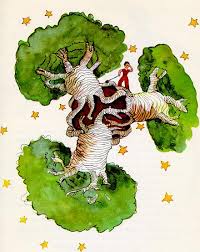
Watch Out for the Baobabs!

Paul encourages Titus (and by extension, us) in Titus 1:15: “To the pure all things are pure, but to those who are defiled and unbelieving nothing is pure; but even their mind and conscience are defiled”. 

“To the pure all things are pure”, I love that.  I think it means that I can find Jesus and joy in everything,  Purity in heart could be the lens through which we view everything. Using that perspective, I’ll share a little something: 

Antoine De Saint Expury wrote a book in 1943 entitled “The Little Prince”. It’s one of my favorites (and no, its not a “Christian” title – this is a to-the-pure-all-things-are-pure-situation, remember?).  Every great once in a while, I’ll take it out and read it all in one sitting, all by myself, preferably on the favorite spot on my back porch, lake view and solitude. I love the language, I love the story, I love the illustrations. I don’t highlight it and underline, but maybe I should – I love the little life lessons! Here’s one that stands out today:

“It’s a question of discipline,” the little prince told me later on. “When you’ve finished your own washing and dressing in the morning, then it is time to attend to the washing and dressing of your planet, just so, with the greatest care.  You must see to it that you pull up regularly all the baobabs, at the very first moment when they can be distinguished from the rose-bushes which they resemble so closely in their earliest youth.  It is very tedious work,” the little prince added, “but very important….. Sometimes, there is no harm in putting off a piece of work until another day. But when it is a matter of baobabs, that always means a catastrophe.”

Let that sink in for a minute: “It is very tedious work, but very important.

Solomon 2:15 communicates something similar in a different way: “Catch us the foxes, the little foxes that spoil the vines, For our vines have tender grapes.”

This isn’t a “one and done” situation. Solomon’s little foxes, like the little prince’s baobabs, had to be tended to daily. The “little foxes” were things that seemed small, until they were allowed to get out of control. The “little foxes” are things in our own lives that we might ignore or gloss over or get to another day until we don’t get to them at all.

Sometimes, there is no harm in putting off a piece of work until another day. But when it is a matter of baobabs, that always means a catastrophe.”

Sometimes a delay isn’t harmful. Y’all know I practice Sabbath (you should too! I wrote about it here), I practice a “rule of life” (hey, let’s talk about that one soon!), and there are times in life when we need a rest. Life happens sometimes, things get delayed sometimes, but these interruptions or surprises should be the exception, not the norm.

What are “little foxes” for you? What are things in your life that you should tend to daily? My suggestion is that you include spiritual foundational disciplines: Prayer, Giving and Service, Bible Study, Church Attendance, Worship, Sabbath, Spiritual Friendships, Love, Operating in the Fruit of the Spirit, Fasting…. Your vines have “tender grapes”, the little prince’s planet was small, ignoring the foxes and the baobabs always means a catastrophe. Maybe not at first – it might take you a little time to realize that you have lost your “first love”, but that’s how the enemy of your soul operates. Slowly, subtly, a drift so gradual that you fail to notice that you are slipping away.

It’s a question of discipline, tending to these daily practices. The beautiful thing is: when you cultivate these habits, your love for the Lord will grow. You will be drawn closer to His heart. These daily disciplines will anchor your love for God, and guess what? The “little foxes” and the “baobabs” won’t stand a chance!

Even if it seems tedious at times, that’s a treasure!