Bearing One Another’s Burdens: a Two Way Street!

Galatians 6:2 says, “Bear one another’s burdens, and so fulfill the law of Christ.”

That little verse holds a very big idea. Paul is telling us that when we bear one another’s burdens—when we show love in tangible, practical ways—we are actually fulfilling the law of Christ. What law? The law that Jesus Himself gave us: to love one another, and to be known by that love.

It’s one thing to talk about love, but Paul takes it a step further. He reminds us to put feet on it. Love isn’t only a feeling; it’s an action. Bearing one another’s burdens means praying for each other, lifting each other up, helping each other, and taking action to care for one another in real and practical ways.

For me, this verse is both a comfort and a conviction.

This verse comforts me because it reminds me that I am not alone. If you’ve been with me for any length of time, you know how important relationships are to me. Of course, my relationship with Jesus comes first—but investing in spiritual friendships matters to me as well. This verse reassures me that community is part of God’s design. We weren’t made to walk through life alone.

This verse convicts me because it reminds me that bearing one another’s burdens goes both ways: it means that I share your burdens and also that you share mine.

The first part—helping others—that comes naturally to me. I’m honored to pray for someone, to encourage, to step in and help however I can. But the second part—the part where I’m the one who shares my burdens—doesn’t come as easily.

Can I be vulnerable with you? Somewhere along the way, I picked up a lie: “If I’m not perfect, you won’t love me.” Because of that lie, sharing my own burdens sometimes feels risky. What if I’m rejected? What if people see my weakness and step back instead of leaning in? Maybe you can relate?

The truth is, it’s hard to let others see the places where we’re weak – but if we keep everything inside, we’re missing the fullness of what God designed community to be. (I’m not suggesting that you tell everybody everything. That wouldn’t be wise. We need to use discernment and listen to the Holy Spirit about what to share and with whom. But keeping everything to ourselves isn’t wisdom either).

One of my favorite verses that reminds me of this truth is Psalm 103:14: “The Lord knows our frame; He remembers that we are dust.” God knows our weaknesses. He knows our limits. Still, in His kindness, He placed us in families, in communities, and in relationships with one another so that no one has to walk alone.

Sometimes we forget that perfection was never the expectation. Yes, some people may wrongly expect it, but God never does. He sees our weaknesses, and instead of rejecting us, He meets us with compassion. That’s the same heart we should have toward one another: grace, love, and a judgment-free space where burdens can be shared.

Isaiah 40:11 gives us a beautiful picture of how God deals with us: “He shall feed His flock like a shepherd; He shall gather the lambs with His arm, carry them in His bosom, and gently lead those who are with young.”

What a picture of gentleness. Our Shepherd doesn’t deal harshly with us. He carries us close to His heart. He leads us with tenderness. He loves us when we’re strong and when we’re weak, when we get it right and when we get it wrong. Friend, He delights in you. On your best days and on your worst days, you are a delight to the Lord.

When we live in that freedom—resting in His love—we can extend the same freedom to others. We can walk in grace toward one another, allowing our community to be a safe place where burdens can be shared.

John 3:16 is a verse many of us learned as children: “For God so loved the world that He gave His only Son, that whoever believes in Him should not perish but have eternal life.”

But we often forget to read the very next verse: “For God did not send His Son into the world to condemn the world, but that the world might be saved through Him” (John 3:17).

Our salvation is a free gift. It’s not something we can earn, and it’s not something we can lose by not being “perfect enough.” There is no condemnation in Christ.

If that’s true, then our communities should reflect the same freedom. Bearing one another’s burdens should never come with fear or judgment. You should be able to come to me without fear, and I should be able to come to you without fear—because we’re not trying to meet an impossible standard. We’re simply living as beloved children of God.

If you serve in ministry—a pastor’s wife, pastor, small group leader, Bible study teacher—this can feel even harder. There’s a real (or sometimes imagined) pressure to appear perfect in front of those you serve. I’ve felt that too.

Let me encourage you: don’t be afraid to be vulnerable. Don’t carry the weight of perfection on your shoulders. As you bear the burdens of others, also allow others to bear yours. That’s not weakness—it’s obedience.

When we do this, letting this burden sharing happen on both sides, we’re not just helping each other. We’re fulfilling the law of Christ. Let’s be the kind of people who carry each other’s burdens. Let’s create spaces where it’s safe to be honest, where grace and love flow freely, and where no one has to fear rejection.

We don’t have to be perfect to be loved—by God or by each other. And when we live that way, we fulfill the very law of Christ: to love one another as He has loved us. What a treasure that is! ❤

The Scared Steps that Build Our Faith

There’s a saying floating around in the self-help world: “Do it scared.”

It’s catchy. It’s inspiring. And it’s a whole lot easier said than done.

When fear shows up, our first instinct is often to stop, freeze, or retreat. We imagine that in order to move forward, we have to first get rid of the fear. Know this: fear isn’t always a stop sign. Fear can be an indicator that we’re stepping into something bigger than ourselves.

Almost every time God says “do not fear” in Scripture, He couples it with a promise of His presence:

  • “Do not fear, for I am with you; do not be dismayed, for I am your God.” (Isaiah 41:10)
  • “For I, the Lord your God, hold your right hand; it is I who say to you, ‘Fear not, I am the one who helps you.’” (Isaiah 41:13)
  • “Even though I walk through the valley of the shadow of death, I will fear no evil, for you are with me.” (Psalm 23:4)
  • “God is our refuge and strength, an ever-present help in trouble. Therefore we will not fear…” (Psalm 46:1–3)
  • “Do not be afraid of them; the Lord your God himself will fight for you.” (Deuteronomy 3:22)
  • “Be strong and courageous. Do not be afraid or terrified… for the Lord your God goes with you; He will never leave you nor forsake you.” (Deuteronomy 31:6)
  • “The Lord is my helper; I will not fear; what can man do to me?” (Hebrews 13:6)

We sometimes imagine fear as a weakness or a flaw, but Jesus understands fear intimately. Hebrews 4:15 reminds us that He experienced every emotion we do—without sin. He knows what it feels like to be pressed by uncertainty, threatened by danger, and pulled into the tension of “this is hard, but I must obey.” Fear is human.

Remember the Garden of Gethsemane? Jesus prayed in deep distress, fully aware of the suffering to come, and still He walked forward in obedience. That’s not the absence of fear—that’s courage grounded in the Father’s will.

Maybe “do it scared” isn’t about pushing through in our own strength while fear gnaws at the edges of our courage. Maybe it’s about doing it with fear… Not fear/scared but fear/confidence in the Lord. The kind of confidence that says, “Yes, my heart is racing, but my God is here. My knees might be shaking, but my Savior’s hand is holding mine. I may tremble, but His promises will not.”

Vulnerable moment: I get scared sometimes. I can be full of faith and still feel the thump of anxiety in my chest. (Okay, to be really honest – I feel it in my stomach – that kind of dropping, didn’t finish my homework, might throw up kind of feeling). I’ve learned that I can hold fear and faith together, the way I’ve held joy and grief at the same time. Sometimes I can switch from fear scared to fear confident in the Lord as quickly as flipping off a light. Fortunately, when the light in my soul flickers off, the Holy Spirit is there to switch it back on. Every time.

The Holy Spirit doesn’t shame us for feeling fear. He simply displays the truth again and again—reminding us of God’s promises, steadying our breath, whispering the courage of Scripture into our hearts. In that light that He switched back on for me, I can do anything He’s called me to do. Not because fear is gone, but because His presence is greater.

And you can, too.

When David wrote Psalm 23:4—“Even though I walk through the valley of the shadow of death, I will fear no evil”—he didn’t deny that the valley existed. He didn’t minimize the shadows. He simply placed the reality of God’s presence above the reality of danger.

That’s what “do it scared” looks like for a believer: not blind bravado, not pretending fear doesn’t exist, but taking the next step because the Lord is with us.

Every time we take that step, something happens: fear loses just a little more of its grip. Faith grows a little stronger. We start to see God’s fingerprints not just on the moments when we felt brave, but on the trembling moments when we leaned on Him most.

If you’re standing at the edge of something right now—something that feels risky, uncomfortable, or overwhelming—here’s a prayer for you:

Lord, You know my fears. You know how my heart races when I think about what lies ahead. Thank You for the reminder that You never leave my side. Give me courage to take the next step, not because I feel strong, but because You are my strength. Let Your presence be more real to me than my fear. In Jesus’ name, amen.

You don’t have to wait until you “feel” ready. You don’t have to wait for the fear to disappear. If God has called you, He’s already promised to go with you. Take the step. Make the call. Start the project. Have the conversation. You aren’t alone, and moving forward in the knowledge that God has you on every side is a treasure ❤

In the Gap: Holding On Between the Storm and the Rescue

This morning, I’ve been thinking about a promise from Jesus that doesn’t usually make it onto Instagram feeds or coffee mugs. It’s not the one we highlight with glittery pens or turn into wall art, but it is a promise—and it’s one that speaks to real life:

“In this world you will have tribulation.” John 16:33 (NKJV)

Tribulation. Storms. Struggle.

“Praise the Lord from the earth, You great sea creatures and all the depths; Fire and hail, snow and clouds; Stormy wind, fulfilling His word.” Psalm 148:7–8 (NKJV)

These aren’t the moments we rush to post online. We tend to reserve our social media feeds for the highlights—the celebrations, the breakthroughs, the pretty parts of the journey. But what about the fire? The hail? The stormy wind?

Even the stormy wind fulfills His word. That’s hard to grasp sometimes. We believe God is with us in the peaceful places—but what about when life gets loud and chaotic? What about when we’re tossed around by disappointment, uncertainty, or waiting?

The Bible never promises a life free of storms. But it does promise purpose in them and presence through them. Storms don’t disqualify you from God’s promises. They may, in fact, be the very setting where those promises are forged more deeply into your soul.

Scripture also says this:

“The end of a thing is better than its beginning; The patient in spirit is better than the proud in spirit.” Ecclesiastes 7:8 (NKJV)

The end is better than the beginning. But what about the middle?

What about that awkward, stretched-out space between where we started and where we hope to end up? What about the gap?

There’s often a long and confusing distance between the first step of obedience and the moment of breakthrough. Between the letting go and the stepping in. Between the storm and the rescue.

That in-between space is hard.

It’s tempting to question the path, doubt the decision, or wonder if we’ve missed something. But more often than not, the gap is exactly where God is growing our faith.

Maybe you’re in that space today. You said “yes” to something God placed in your heart. You followed His leading. You obeyed. But now… things feel quiet. Or messy. Or painful. Or like nothing is happening at all.

If that’s you, I want to encourage you: the gap is not evidence of God’s absence. It’s an invitation to deeper trust.

Jesus didn’t stop at “you will have tribulation.” He continued with confidence and compassion:

“But be of good cheer, I have overcome the world.” John 16:33

He reminds us that we’re never alone. Not in the joy and not in the struggle. Not at the finish line and not in the wilderness. He has already overcome—and that changes everything.

This morning, a friend texted me a verse she’s been holding onto—a “light at the end of the tunnel” kind of promise. It immediately lifted something in my spirit, and I want to share it with you, too:

“Unto the upright there ariseth light in the darkness: He is gracious, and full of compassion, and righteous.” Psalm 112:4 (KJV)

Light in the darkness.

What a beautiful phrase. Not just light after the darkness. Light in it.

God doesn’t wait for the storm to end to show up. He doesn’t wait for you to figure it out before offering His compassion. He is gracious and kind and righteous—right in the middle of your mess.

The gap doesn’t mean you’re lost.

It doesn’t mean the story is over.

It just means you’re in the middle.

The middle matters more than we often realize. It’s where character is shaped. It’s where trust is refined. It’s where you learn not just to believe in God’s promises—but to believe in His heart.

If you find yourself in a waiting season today, I want you to know:

You are not behind. You are not overlooked. You are not forgotten. You are simply between the beginning and the breakthrough. The storm may still be raging, but the Lord is still speaking. The fire may be refining, but His compassion is still surrounding. The path may feel uncertain, but His presence is steady and sure.

So hang in there, friend. You don’t need to see the whole map to trust the One who wrote it. You don’t need the full ending to rest in the Author of your story. You don’t need a picture-perfect update to prove that God is working.

He is working – and when the light arises you’ll see how deeply He’s been present in the process all along.

So if you’re in the gap today—between the step and the arrival, between the storm and the rescue—take heart. You’re not alone. You’re not empty. You’re not forgotten. And you’re not alone – I’m here with you.

You’re walking with the One who has already overcome – and that is a promise, a treasure, worth holding on to ❤

More Sure than Sunrise

This morning, as I went through my usual routine, I noticed something written on the bottle of my face wash: “targets 100% of daily pollution.” It caught my eye, but not for the reason the marketing team probably intended. I paused and thought, “That phrase actually means nothing.”

Sure, it targets 100%—but does it actually hit 100%? “Targeting” doesn’t guarantee success. It doesn’t even necessarily imply effort. I can target anything all day long and never come close to actually hitting it. I’m sure when I bought that face wash, I read the label and thought, “Oh okay, 100%,” trusted it blindly and moved on without a second thought. We’ve gotten so used to empty phrases that we barely notice them anymore.

I thought about that phrase through the morning. Later, as I tossed a load of laundry into the washer, I realized that I don’t even question whether the clothes will come out clean. I trust that the detergent will do its job. I don’t second-guess the rinse cycle. I just press “start” and walk away in full confidence that it’s going to work. Again, I wondered: what else do I trust in blindly?

It’s a silly question at first glance, but really… do I have more immediate confidence in man-made systems and mass-produced products than I do in the very words of God?

In our world, we’re constantly bombarded by words that sound important but lack substance. Commercials, slogans, political speeches, even everyday conversations—so much of what we hear is padded with fluff and exaggeration. Our culture has become comfortable with over-promising and under-delivering. Without realizing it, we start to read everything with a filter of skepticism.

But this can never be applied to God’s words. Our casually adopted skepticism or blind trust don’t belong here when we open our Bibles.

To be honest, Jesus said some things that are so big and bold that they could be hard to believe at times, but every word is true!

  • He IS our Healer. (Isaiah 53:5)
  • He IS our Intercessor. (Romans 8:34)
  • He IS our Best Friend. (John 15:15)
  • He IS our Savior. (Luke 2:11)
  • He IS our High Priest who understands both our deepest pain and our greatest joy. (Hebrews 4:15)

Beyond being true, He invites us to question, understand, and know. We don’t have to look at the label and say “oh, He’ll heal” as if it is a casual phrase with no meaning. These aren’t just poetic phrases or theological vocabulary. These are realities. They’re promises backed by the character of a God who cannot lie (Titus 1:2). Jesus doesn’t just target our needs—He fulfills them. He doesn’t aim vaguely in our direction—He comes close and delivers every single time. Sure, you can trust Him blindly, that’s no problem. Unlike the person who wrote “targets 100% of daily pollution” and hopes you buy it without question (like I did!), God asks us to test Him, taste and see that He is good. What a comfort it is to have the promise, understand the promise, be able to stand in it and understand it as you see His word come alive and come to pass in your own life.

Here are a couple of favorites, invitations from the Lord to not only trust Him but also understand Him:

“Oh, taste and see that the Lord is good;
Blessed is the man who trusts in Him!” Psalm 34:8

“….Test me in this,” says the Lord Almighty, “and see if I will not throw open the floodgates of heaven and pour out so much blessing….” Malachi 3:10

One more today: Psalm 130:6 says, “My soul waits for the Lord more than those who watch for the morning—yes, more than those who watch for the morning.”

Those who “watch for the morning” are the night guards, the sentries on duty before dawn. They’ve spent hours in the dark, and they know the morning is coming. They don’t wonder if the sun will rise—they know it will. Their waiting is filled with anticipation, not doubt. The psalmist says his soul waits for the Lord even more than that. The psalmist is more convinced that God will show up in his life than he is that the sun will rise in the morning.

Are we that convinced? We can be. Because unlike the world’s empty words and broken promises, the words of God are always reliable, always true. Numbers 23:19 reminds us:

“God is not a man, that He should lie, nor a son of man, that He should change His mind. Does He speak and then not act? Does He promise and not fulfill?”

Everything God has said, He will do. Every word He’s spoken, He will keep. His truth is more constant than the sunrise and more dependable than any product or process you’ve ever trusted.

So what do we do with this?

First, we learn to take God at His Word. We read Scripture and believe it. Not as poetry or philosophy, but as living truth. If He says He is near to the brokenhearted, He is. If He says He’ll never leave us, He won’t. If He says His grace is sufficient, it is.

Second, we let His faithfulness shape the way we speak. Jesus said in Matthew 5:37, “Let your ‘yes’ be ‘yes,’ and your ‘no,’ ‘no.’ Anything more than this comes from the evil one.”

If we are children of God, then our words should carry weight, too. No fluff, no exaggeration, no glossing over promises we don’t intend to keep. We reflect the heart of God when our words are trustworthy—when what we say actually means something.

I encourage you to look at the words of the Lord not like you look at a marketing label, but like you look at the sunrise: unchanging, trustworthy, certain. More certain than the day itself.

Jesus can be trusted. More powerful than any product. More dependable than the sun. Let His truth bring you confidence and peace. No matter where you are in the waiting – whether it is for the sun to rise or the season to change, confidence in the Lord is a treasure ❤

Move Anyway: Faith Doesn’t Wait for Certainty

There comes a moment in every believer’s life when the choice is clear: stay safe and stuck, or take a step of faith. We talk a lot about trusting God, but sometimes trust looks less like peaceful waiting and more like nervous obedience. A shaky step forward. A deep breath and a gulp. However, if you know God is calling you, you must move forward.

Faith doesn’t always feel strong. In fact, it often feels like trembling hands and racing hearts. But faith is not the absence of fear—it’s movement in spite of it. This is the kind of faith God honors, this is the kind of faith that advances His Kingdom.

Let’s look at a few examples of faithful forward motion in Scripture. These aren’t fairytale heroes who always felt bold and sure—they were real people who chose obedience even when the path ahead felt risky or unclear.

Abraham: Moving Without a Map

Abraham’s story in Genesis 12 begins with a stunning command: “Go from your country, your people and your father’s household to the land I will show you.” (Genesis 12:1, NIV)

Not “Go to Canaan.” Not “Here’s a route, here’s your GPS.” Just “Go… to the land I will show you.”

Imagine packing up your life, your family, your future—and stepping into the unknown with no details, no destination, and no guarantees except God said so. Abraham didn’t wait for every detail to fall into place. He moved forward at God’s word. That’s faith.

Daniel: Standing Alone with Conviction

Fast forward to Daniel, exiled in Babylon—a godless culture, surrounded by compromise. Everyone around him had adjusted their standards. Daniel could’ve gone with the flow to keep his position and his comfort, but instead, Daniel “resolved not to defile himself” (Daniel 1:8), even though that meant standing almost completely alone. He was faithful in the small decisions—what he would eat, how he would pray—and God honored it.

Daniel shows us that forward motion in faith sometimes looks like staying planted in conviction while everyone else drifts. It may not be popular. It may cost you status or relationships. But if God has called you to stand—stand.

Esther: Courage in the Face of Risk

Esther’s story is one of the most well-known in Scripture. She was given a divine opportunity to influence a king and save her people. Stepping into that moment wasn’t glamorous, it was terrifying. She told Mordecai, “I will go to the king, even though it is against the law. And if I perish, I perish” (Esther 4:16). Esther had every reason to stay silent. Self-preservation would’ve been the easy choice. Faith compelled her to speak up—even when the cost could’ve been her life.

Sometimes moving forward in faith means putting it all on the line. It’s not reckless—it’s trusting that God’s hand is over the outcome.

Jesus: Obedience to the Cross

And of course, our ultimate example is Jesus. No one was more aware of the cost of obedience than Christ Himself. He knew the cross was coming. He knew the betrayal, the suffering, the agony. He even said, “Don’t you think I could call on My Father, and He would at once put at my disposal more than twelve legions of angels?” (Matthew 26:53). But Jesus didn’t call for a rescue. He submitted. He obeyed. He moved forward—for us.

“Not my will, but Yours be done.” (Luke 22:42)

Jesus teaches us that sometimes faith means walking straight into pain, into sacrifice—knowing that resurrection is coming, that purpose is on the other side, and that the Kingdom of God is worth it all.

Your Turn: Do Your Part

Each of these stories reminds us that the first step doesn’t always come with full clarity or confidence. But God doesn’t ask for perfect understanding—He asks for obedience.

What’s your move?

  • Is it a job change that doesn’t make sense on paper?
  • A conversation you’ve been avoiding?
  • A ministry you feel unqualified to start?
  • A boundary you need to hold, even if it’s unpopular?

Whatever it is, take the step. God’s provision meets our obedience. When we do our part—when we trust, move, stand, speak, obey—He always does His. Do you need provision for your step of faith? He’s a provider. Do you need protection for your step of faith? He’s your Protector. Do you need wisdom for your step of faith? He’s your infallible guide.

Scripture says, “The Lord will fight for you; you need only to be still.” (Exodus 14:14) Be careful: “still” does not mean stuck. Sometimes it means settled in trust as we keep stepping forward.

So take a deep breath. Gulp if you have to. But move forward. You’ll find that your treasure awaits on the other side of your obedience!

p.s. here’s my move of faith today! Launching a new ministry, Connect Mentoring Network. Friend, we are in this together – as I am asking you to step out, I am also stepping out! Let’s pray for each other!

Don’t Wait: Make the First Move!

Spiritual friendship is not just “nice to have” in the Christian life—it’s essential.

“Two are better than one… If either of them falls down, one can help the other up.” Ecclesiastes 4:9, 10

Have you ever hesitated to reach out to someone, afraid of being rejected or misunderstood? Maybe you saw someone at church who looked a little lonely, or a mom at the park who seemed like she might want a chat. You thought, “I should go say something”, but then quickly talked yourself out of it…. Let’s be honest—friendship on its own can feel risky, but being the one to make the effort ups the risk for sure. 

Let’s start with the obvious: initiating friendship feels vulnerable. You don’t know how you’ll be received. You risk feeling awkward, ignored, or even rejected. In our social-media-saturated world, it’s easy to stay in our own bubble, where we scroll, like, and comment without ever truly engaging.

From the beginning, God said, “It is not good for man to be alone” (Genesis 2:18). While that verse speaks to marriage, the principle really is broader. We are created for connection. Scripture is full of examples of deep, godly friendships: David and Jonathan, Ruth and Naomi, Paul and Timothy, Jesus and His disciples.

Still, we hesitate.

We tell ourselves lies like:

  • She probably has enough friends already.
  • What if she thinks I’m too much?
  • I don’t want to come across as needy.
  • I’ve been burned before—I’m not doing that again.

All of those fears are valid—but fear doesn’t get to have the final say. When it comes to godly friendship, the return on investment is greater than we can imagine. God’s best for you happens in community; it’s the enemy of your soul who wants you in isolation.

Jesus Himself modeled what it means to initiate relationship – we talked about this on the blog a few weeks ago.  Check it out here if you missed it!

Jesus invited Himself over. Jesus made the first move. If the Son of God was willing to reach across social barriers, awkward situations, and the opinions of others to extend friendship, shouldn’t we be willing to do the same? The truth is, anything worthwhile involves some level of risk, and that includes friendship.

Friendship doesn’t happen by accident. It’s not something we stumble into—it’s something we choose to build. Like any investment, it requires intentionality, time, and sacrifice.

I loved morning car rides with my children on the way to school when they were small many years ago. There were a couple of verses that were on the usual rotation, and one that was repeated often was Proverbs 18:24. “A man who has friends must himself be friendly.” That’s not just a cute quote—it’s a reminder that friendships grow when we’re willing to plant seeds.  

Sometimes those seeds look like:

  • Sending the first text.
  • Asking someone to grab coffee.
  • Sitting next to someone new at church.
  • Starting a conversation, even when you feel awkward.

Prepare yourself: not every seed grows into a deep friendship. Some fade. Some were only meant for a season. However, some grow roots so deep that they strengthen your faith, bring you joy, and sharpen you into the person God is calling you to be. Those kinds of roots bring forth good fruit, friends who will:

  • Speak truth when we’re tempted to believe lies
  • Pray for us when we don’t have the words
  • Celebrate our victories and mourn our losses
  • Keep us accountable and point us back to Christ
  • Lift us up when we feel down

That kind of friendship doesn’t just happen. It starts with someone being brave enough to go first.

Here’s the thing: you’re not the only one longing for connection. That woman you keep thinking about inviting to coffee? She might be praying for someone like you. The young mom sitting by herself at small group? She may be hoping someone notices her.

Someone is waiting for you to be bold. Not perfect. Just willing.

This week, take a step toward friendship. Plant the seeds. Show yourself friendly.

  • Send the text. 
  • Invite the person. 
  • Sit next to someone new. 
  • Smile first. 
  • Speak up. 
  • Be the one who reaches out.

Are you nervous or unsure? That’s okay, don’t let those feelings stop you. Friendship built on faith, truth, and love is worth every bit of risk and effort. Remember that Jesus made the first move toward us. He came close. He extended His hand. Let’s follow His lead.

Godly friendship is a treasure – but many times you have to make an effort to enjoy it’s benefits!

p.s. I’m continuing this discussion on the podcast this week! New episode will drop on Thursday. Subscribe on Youtube, Spotify or Apple Podcasts this week so we can connect again! Here’s the link tree so we can connect!

Watch Out for the Baobabs!

Paul encourages Titus (and by extension, us) in Titus 1:15: “To the pure all things are pure, but to those who are defiled and unbelieving nothing is pure; but even their mind and conscience are defiled”. 

“To the pure all things are pure”, I love that.  I think it means that I can find Jesus and joy in everything,  Purity in heart could be the lens through which we view everything. Using that perspective, I’ll share a little something: 

Antoine De Saint Expury wrote a book in 1943 entitled “The Little Prince”. It’s one of my favorites (and no, its not a “Christian” title – this is a to-the-pure-all-things-are-pure-situation, remember?).  Every great once in a while, I’ll take it out and read it all in one sitting, all by myself, preferably on the favorite spot on my back porch, lake view and solitude. I love the language, I love the story, I love the illustrations. I don’t highlight it and underline, but maybe I should – I love the little life lessons! Here’s one that stands out today:

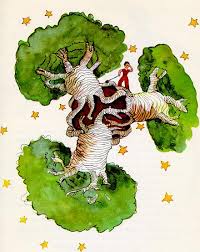
“It’s a question of discipline,” the little prince told me later on. “When you’ve finished your own washing and dressing in the morning, then it is time to attend to the washing and dressing of your planet, just so, with the greatest care.  You must see to it that you pull up regularly all the baobabs, at the very first moment when they can be distinguished from the rose-bushes which they resemble so closely in their earliest youth.  It is very tedious work,” the little prince added, “but very important….. Sometimes, there is no harm in putting off a piece of work until another day. But when it is a matter of baobabs, that always means a catastrophe.”

Let that sink in for a minute: “It is very tedious work, but very important.

Solomon 2:15 communicates something similar in a different way: “Catch us the foxes, the little foxes that spoil the vines, For our vines have tender grapes.”

This isn’t a “one and done” situation. Solomon’s little foxes, like the little prince’s baobabs, had to be tended to daily. The “little foxes” were things that seemed small, until they were allowed to get out of control. The “little foxes” are things in our own lives that we might ignore or gloss over or get to another day until we don’t get to them at all.

Sometimes, there is no harm in putting off a piece of work until another day. But when it is a matter of baobabs, that always means a catastrophe.”

Sometimes a delay isn’t harmful. Y’all know I practice Sabbath (you should too! I wrote about it here), I practice a “rule of life” (hey, let’s talk about that one soon!), and there are times in life when we need a rest. Life happens sometimes, things get delayed sometimes, but these interruptions or surprises should be the exception, not the norm.

What are “little foxes” for you? What are things in your life that you should tend to daily? My suggestion is that you include spiritual foundational disciplines: Prayer, Giving and Service, Bible Study, Church Attendance, Worship, Sabbath, Spiritual Friendships, Love, Operating in the Fruit of the Spirit, Fasting…. Your vines have “tender grapes”, the little prince’s planet was small, ignoring the foxes and the baobabs always means a catastrophe. Maybe not at first – it might take you a little time to realize that you have lost your “first love”, but that’s how the enemy of your soul operates. Slowly, subtly, a drift so gradual that you fail to notice that you are slipping away.

It’s a question of discipline, tending to these daily practices. The beautiful thing is: when you cultivate these habits, your love for the Lord will grow. You will be drawn closer to His heart. These daily disciplines will anchor your love for God, and guess what? The “little foxes” and the “baobabs” won’t stand a chance!

Even if it seems tedious at times, that’s a treasure!

Philippians 2:5-8 :)

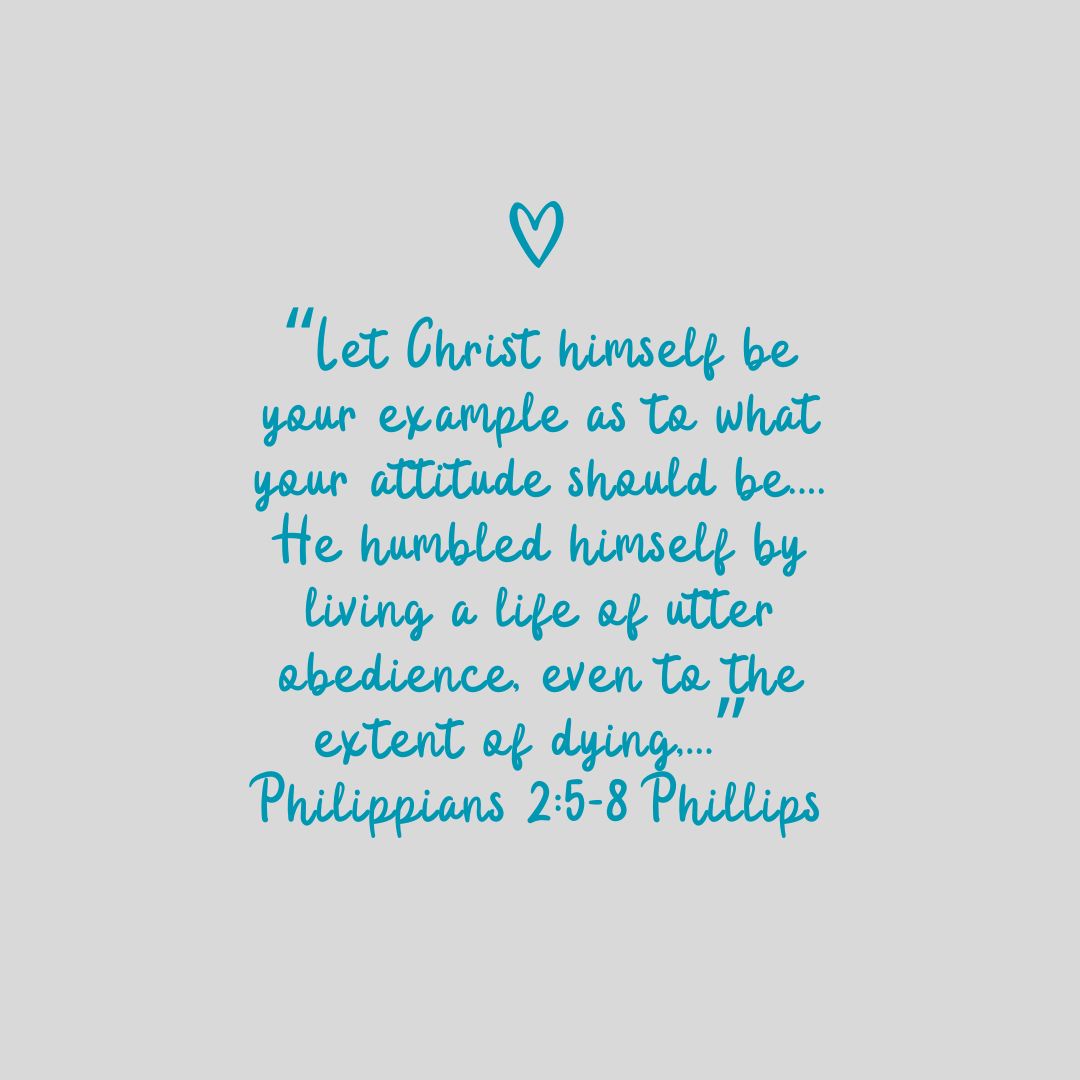
“Let Christ himself be your example as to what your attitude should be. For He, who had always been God by nature, did not cling to His prerogatives as God’s equal, but stripped Himself of all privilege by consenting to be a slave by nature and being born as mortal man. And, having become man, He humbled himself by living a life of utter obedience, even to the extent of dying, and the death He died was the death of a common criminal” (Philippians 2:5-8 Phillips)

(I love the Phillips translation! Try reading the Bible in a translation that is new to you – it will give it a fresh take!)

“Let Christ himself be your example as to what your attitude should be”

Jesus’ motivation, His very existence, His entire purpose for coming to earth was to redeem and rescue.  He said Himself, “For the Son of Man himself has not come to be served but to serve, and to give his life to set many others free” (Mark 10:45 Phillips).  His constant motivation was love. What if this was the litmus test for our actions as well?

Check your attitude this morning: Let Christ Himself be your example.

  1. Is love your continual motivation?
  2. Are you more interested in serving others than in serving your own purposes?

I have to ask myself these questions daily.  I find myself in situations daily where I have to make a decision separate from the inclination of my flesh.  I find myself daily evaluating what is best for me vs what is best for the people within my sphere of influence.

Sometimes the required action is mutually beneficial – sometimes the required action does not seem beneficial to me, so what do I do?  I trust the Lord to love me as I follow His example in loving others. I trust Him to take care of me as I take care of others. I leave behind the scarcity mentality.

It’s not exactly 100%.  As much as I want everything to be black and white, right and wrong (I find comfort in the boundaries), there’s gray.  You pray and do the best you can. You ask the Lord to test your motives and reveal your heart. You ask Him to search you and know you.  Even Jesus took care of HImself – He went to the garden alone. He took the disciples away for a rest. He slept in the boat before the storm.  He fasted and was separate, always doing what the Father asked Him to do. Take this as an example, not an excuse.

If I choose SELF over OTHERS, then I am not trusting the Lord. If I choose SELF over OTHERS, then I am not loving as Jesus loved. Loving like Jesus loves means that I come in second.

“For He, who had always been God by nature, did not cling to His prerogatives as God’s equal, but stripped himself of all privilege by consenting to be a slave by nature and being born as mortal man”

It’s significant to notice that Jesus never claimed the rights due Him as the Son of God.  Reading His life years later, we might not complain had Jesus moved into His comfortable house and taught at the local church, teaching people how to minister and sending them out, but never leaving His own town. We might think, “Well, that’s what the boss does.  The general himself doesn’t go out into the front lines…” and then in our twisted way of thinking, we would have concluded that leadership was a place to arrive at, and that the “harder work” will come to an end at some point.

I did think when I was younger “well, when I have more money”, “well, when I am finished with school”, “well, when we have a larger church”, “well, when fill-in-the-blank-here”, THEN I will have arrived, THEN I won’t have to work so hard, THEN, life will be easier.

You see the downward spiral there?  Jesus knew, God knew, that one day in our society centered on SELF, we would misinterpret Jesus and think there was a place to arrive at, some place where it would be okay that our own needs came before the needs of others, to a place where it was okay for us to be comfortable and supervise.  That would not do – so Jesus made sure that He took on all the wonders and all the hardships of being human, and didn’t lay claim to any “rights” He may have enjoyed as the Son of God.

It’s important to note the why: why did Jesus lay aside His prerogatives as God’s equal?  I think two things:

He knew Who He was, and He knew the behavior of others would not change His identity.  

I also think that insisting on His rights, driving home the point that He “was God’s equal and therefore” wasn’t the main thing.  The main thing was to reconcile people back to God. The main thing was to demonstrate the love and the heart of the Father, the main thing was to serve and be served, the main thing was to communicate

“The Spirit of the Lord is upon Me,

Because He has anointed Me

To preach the gospel to the poor;

He has sent Me to heal the brokenhearted,

To proclaim liberty to the captives

And recovery of sight to the blind,

To set at liberty those who are oppressed;

To proclaim the acceptable year of the Lord.” (Luke 4:18-19 NKJV)

In order for people to receive salvation and experience the benefits of Jesus’ sacrifice on the cross, they were going to have to also understand that He was God’s Son, sent as a substitute for their sins.  But that wasn’t the gateway to Jesus’ message: “God loves you, God wants you free, God wants you healed, God wants you whole – and if I can effectively reconcile you back to God, you’ll know that I am truly sent from Him”.  His motivation was love for these lost people, these sheep without a shepherd.

My first career was teaching music in elementary grades. My point in teaching music was not to make sure that the kiddo’s know that I am their teacher – I never taught a lesson on who I am. However, as I stay on message, they figure it out and they begin to trust me. One day they’ll dance at their wedding or sing a lullaby to their child, and I’ll have a small part in that.  And that’s literally nothing, so insignificant in comparison to Jesus’ purpose, it’s embarrassing to even mention it. For Jesus, the most important thing was communicating His purpose, not promoting His position.

If we are going to love people like Jesus loved people, we’re going to have to figure out what the most important thing is and stay on that – and the most important thing is not us.

Maybe loving like Jesus loves requires laying aside my “rights” or promoting His purpose over my position for the benefit of others.

“And, having become man, He humbled himself by living a life of utter obedience”

Look at this, it’s not going to be popular:

Humble: 1. having or showing a modest or low estimate of one’s own importance.

  1. of low social, administrative, or political rank

So being humble is having a modest view of your own importance (Jesus was the very definition! Who is more important than He is? Who had a more modest view of Himself than He did?) OR actually being of low rank.  

I guess it’s the same as the last point – but if you have to move out of the way in order for someone to see God, move out of the way.  If you have to work hard for the greater good and at the end of the day no one noticed or even knew, you’ll have the satisfaction of knowing that God sees you – and He is the reason you are working anyway.  

And being seen by the Lord?  Wow, what an amazing treasure that will be! ❤ 

little treasures :)

Among all the other changes and life events, we moved about three years ago.  Not to a new town, just a new house.  With all the “babies” grown and moved out, I guess it was time to downsize. In my dining room, I have these floating shelves above my sideboard, super cute.  I love to decorate them with my favorite things.  After having so much fun decorating them for Christmas, I decided I would do a subtle little “nod” to Valentines – I put out my paternal grandmother’s formal china with its little pink rosebuds, got a few pink things from Hobby Lobby and Target (and even had a Valentines dinner for some friends with pink chargers!).  Fun! (oh how Mama Annie would love it too, seeing her dishes so loved!)


Since Christmas and Valentines Day were so much fun, I decided a little “nod” to St Patrick’s Day would be fun too, so off to my favorite shops I went!  Turns out, St Patrick’s day is not subtle…. everything I saw was pretty “loud”, sparkly, not the little “hint” of shamrocks I had hoped for, but then I remembered: my little Irish girl! Can we take a little rabbit trail together? 


My maternal grandmother collected music boxes.  Lots of them, shelves and shelves, boxes and boxes.  I loved playing with them when I was small. Some were very large, some were very expensive, but all of them were out – she didn’t mind when we played them. This little Irish girl plays “When Irish Eyes Are Smiling”, but have your earplugs handy when I start her up – she’s so out of tune, it will give you a headache when she plays. Her dress is cracked, someone glued her back together long before I was around. Her paint is worn off in places.   I have very specific memories of this one when I was small – every time I got down the music boxes, I made sure she was one of them. I remember feeling sorry for her, thinking that no one would play with her because she was broken and didn’t play a pretty tune.  I always thought no one would want her, so I made sure to give her some attention when I visited.  Isn’t it funny the things were think when we are young?

When my grandmother passed away, my mother, aunts and uncle asked the grandchildren if there was anything in the house we would like.  I don’t think anyone objected when I requested the little Irish girl, and I was so pleased to bring her to my house. Today, she was the perfect “nod” to St Patrick’s Day for my floating shelf.  I decided to display my maternal grandmother’s china along with her music box – it might not be “St Patrick’s Day official”, but it makes me smile.  It makes me remember.   (oh how Super Nana would have loved this too!)

You know, these little treasures – china and chargers and music boxes – all contain little lessons. Titus 1:15 says, “To the pure, all things are pure”. I think this means that God can speak to me in everything if I focus my attention on Him, let my desire for His truth be the filter through which He speaks to me. So, today the lesson is about a broken, out of tune, faded out, old music box.

She doesn’t sparkle. She doesn’t sing sweetly. She doesn’t work quite right. Her dress is cracked. But she’s still treasured – not because of how well she performs, but because of who she belonged to, and the memories she holds. I don’t love her because she’s perfect—I love her because she belonged to my grandmother and now she belongs to me.

And isn’t that just like the Lord?

We may be cracked. Our song may be off-key. We may feel forgotten, or passed over, or patched together one too many times. Even in our imperfections, God chooses us. Loves us. Delights in us. Simply because we are His.

Psalm 22:30 says, “Future generations will hear about the wonders of the Lord” (NLT). I want to be the kind of woman who tells. Who shares. Who puts broken music boxes on the shelf and pink chargers on the table and celebrates every season of life, because every one is a gift. I want to be a bridge between generations—passing down beauty and brokenness, faith and joy, love and legacy.

And in this way, even my little broken Irish girl becomes a treasure ❤

Sweat and Sunscreen and Generational Blessings

“I will establish my covenant between me and you and your offspring after you throughout their generations for an everlasting covenant, to be God to you and to your offspring after you.”  Genesis 17:7

My two-year-old grandson and I love SeaWorld. At this stage in his life, we see it more as a zoo than a theme park. We love to stroll the paths, admire the aquariums, and see the animals above and below the water. He especially loves the shows. He loves the orcas, sharks, Elmo’s train…. He has a lot of favorites, and that makes life with him so much fun!

Last week, I invited his dad/my son to join us for the day. As we sat together at the orca show (his favorite!), my grandson crawled up into my lap. I kissed the top of his head, breathing in that familiar mix of sweat and sunscreen, the universal cologne of little boyhood. Suddenly, I was transported back in time to when his dad was two years old and snuggled in that same spot. That weight, that warmth, that love, that memory brought tears of joy to my eyes.

Watching my grown son hold his son’s hand as they walked through the shark tank (oh wait – the sharks are his favorite!), or laughing as he crammed his 6’4” frame into a tiny seat on Elmo’s train (that’s also his favorite, LOL!), I was struck with gratitude—not just for the sweetness of the moment, but for the enduring goodness of God from one generation to the next.

The promises of God are not limited by age or time. Genesis 17:7 speaks of God’s everlasting covenant—not just with Abraham, but with his descendants. This is the beauty of generational faith: God doesn’t just call me to follow Him—He invites my children, my grandchildren, and their children after them.

We’re not saved by bloodline, of course, but there is an incredible grace in seeing the thread of God’s faithfulness continue through the generations. Psalm 145:4 declares, “One generation shall commend your works to another, and shall declare your mighty acts.” There is no greater joy than watching your children carry on the faith you’ve labored to live out.  One day, God willing, I’ll see my grandson begin to walk that same path.

“We will not hide them from their children, but tell to the coming generation the glorious deeds of the Lord, and His might, and the wonders that He has done.” Psalm 78:4

If we embrace this season with joy, we’ll discover its own special anointing. We become the storytellers of the family faith. That’s my call, and yours: to speak life into the next generation—not just through Bible stories, but through our own testimonies. Tell them about the time God provided when I had nothing. Share how He healed, how He carried me through heartbreak, how He surprised me with peace when it made no sense. These aren’t just stories—they’re spiritual inheritance.

Holding my grandson, watching him gaze at his dad with adoration, I felt it deeply: this is what blessing looks like. Not just health or happiness or financial security, but the continuity of love and faith. My grandson is just the cherry on top!

“Tell your children of it, and let your children tell their children, and their children to another generation.” Joel 1:3

There’s something profoundly holy about watching your grown child parent their own child with gentleness, laughter, and strength. It’s a glimpse of God’s faithfulness—not only in your own life, but in theirs. (Since this post is so personal anyway, I’ll just continue: I’m in awe watching my son and daughter-in-love parent. They are excellent, and their children are surely blessed).

Faith passed down becomes more than memory. It transforms from something we talk about to something we live out, shoulder to shoulder, hand in hand. From the stroller at SeaWorld to the altar at church, from Elmo’s train to the truths of Scripture, every moment is an opportunity to pass along something eternal.

“To him be glory in the church and in Christ Jesus throughout all generations, forever and ever. Amen.” Ephesians 3:21

I’ve been in a season of transition, and know from experience that transitions can be hard. Watching the years unfold brings tears and joy in equal measure. However, these transitions in my family have been a joy and ease: my son becoming a husband, then a dad, me becoming a GiGi. What a joy to hold a child in your arms and know that the God who held you all these years is now holding them, too.

To tell of God’s mighty works, and to declare that His mercy truly endures from generation to generation – that’s my treasure today and I am taking it all in! ❤