Comfort Isn’t the Goal—Obedience Is

Have you ever found yourself asking, “If this is God’s will, shouldn’t it feel easier?”

It’s a question many of us wrestle with. We naturally associate peace with comfort, ease with blessing, and open doors with God’s approval. But when we read Scripture, we discover a different pattern.

Again and again, God calls ordinary people to extraordinary obedience—often requiring them to leave behind what is familiar before they experience His provision.

Noah built before it rained.

Abraham left before he knew the destination.

Ruth walked away from everything familiar.

Jonah learned the hard way that comfort and calling are not always found in the same place.

God’s invitation has never been to pursue the easiest path. His invitation is to follow Him faithfully, trusting that His presence is greater than our preference for comfort.

As I reflected on this truth, I had the privilege of writing a new article for The Christian Post titled “Comfort Is Not Confirmation: Rethinking How God Blesses Us.” In it, I explore what Scripture teaches about obedience, God’s provision, and why we should be careful not to mistake comfort for His confirmation.

👉 Read the full article here: https://www.christianpost.com/voices/comfort-is-not-confirmation-rethinking-how-god-blesses-us.html

As you read, I’d encourage you to prayerfully consider these questions:

  • Is there an area where I’ve allowed comfort to influence my decisions more than obedience?
  • Am I waiting for circumstances to become easier before saying “yes” to God?
  • Where has God already made His direction clear?
  • What is one step of faithful obedience I can take today?

One of the beautiful truths of Scripture is that God doesn’t ask us to have every answer before we obey. He simply asks us to trust Him with the next step.

Whether you’re navigating a ministry transition, a career decision, a family challenge, or a season of uncertainty, remember this: God’s faithfulness isn’t limited by your circumstances. He is present wherever He calls you, and His grace is always sufficient for the journey.

I’d love to hear your thoughts after you’ve read the article. Leave a comment below or send me a message and tell me what resonated with you most. Your stories encourage me, and I know they’ll encourage others as well.

Grace and peace,

Jennifer Spivey

Yes, Jesus Gets Angry – But His Anger Reveals His Love

Yes, Jesus gets angry – but we’ve turned Jesus turning over the tables into a catchphrase.

“I’m about to flip some tables,” we joke when we’re frustrated, inconvenienced, or simply fed up. Somewhere along the way, Jesus’ actions in Mark 11 became a symbol for venting our own anger or justifying our emotional outbursts.

But that’s not what happened at all.

Jesus wasn’t having a bad day. He wasn’t losing His temper. His anger wasn’t misplaced, selfish, or fueled by wounded pride. It was righteous, purposeful, and deeply rooted in His love for the Father and His desire for people to encounter God without unnecessary barriers.

If we reduce this moment to a clever meme or a slogan about “flipping tables,” we risk missing the very reason Jesus overturned them in the first place. Jesus gets angry – but not without a greater purpose.

So before we focus on the tables He overturned, let’s focus on why He overturned them. As we do, we may not only gain a deeper understanding of Jesus’ heart—we may also discover something important about our own.

“On reaching Jerusalem, Jesus entered the temple courts and began driving out those who were buying and selling there. He overturned the tables of the money changers and the benches of those selling doves, and would not allow anyone to carry merchandise through the temple courts. And as he taught them, he said, ‘Is it not written: “My house will be called a house of prayer for all nations”? But you have made it “a den of robbers.”’ Mark 11:15-18

When we read this passage, we often focus on one thing: Jesus gets angry. Let’s take this opportunity to change our focus.

Yes, Jesus gets angry. Jesus overturned tables. He drove people out of the temple courts. He confronted what was happening in a very visible way.

But why?

Was Jesus angry because people were earning a living? Was He angry because people were selling animals for sacrifices? Was He opposed to business? No.

Jesus was angry because something had become a barrier between people and the presence of God.

The temple was supposed to be a place where people encountered God’s mercy. It was supposed to be a place of prayer, forgiveness, healing, and worship. It was supposed to be a place where people discovered the goodness and love of God.

Instead, something had gotten in the way. The very place designed to help people draw near to God had become filled with distractions.

And Jesus loved people too much to leave those distractions in place. 

Jesus Gets Angry - But His Anger Reveals His Love

Jesus Gets Angry When Sin Separates Us From Him

I have been thinking lately about the misconceptions we sometimes have about sin.

We use phrases like, “God hates sin,” and “hate the sin, love the sinner.” While these statements are often meant to communicate a feeling, I think they miss the mark. These statements can sometimes leave people with the wrong impression of God.

Especially when we are the ones struggling.

Sometimes we begin to believe that God’s anger toward sin means God is angry with us. But God’s hatred of sin is never separated from His love for people.

God hates what sin does.

He hates the destruction.
He hates the bondage.
He hates the pain.
He hates the way sin separates us from the life and freedom He created us to experience.

A loving Father does not ignore the things that harm His children. He removes them. He confronts them.

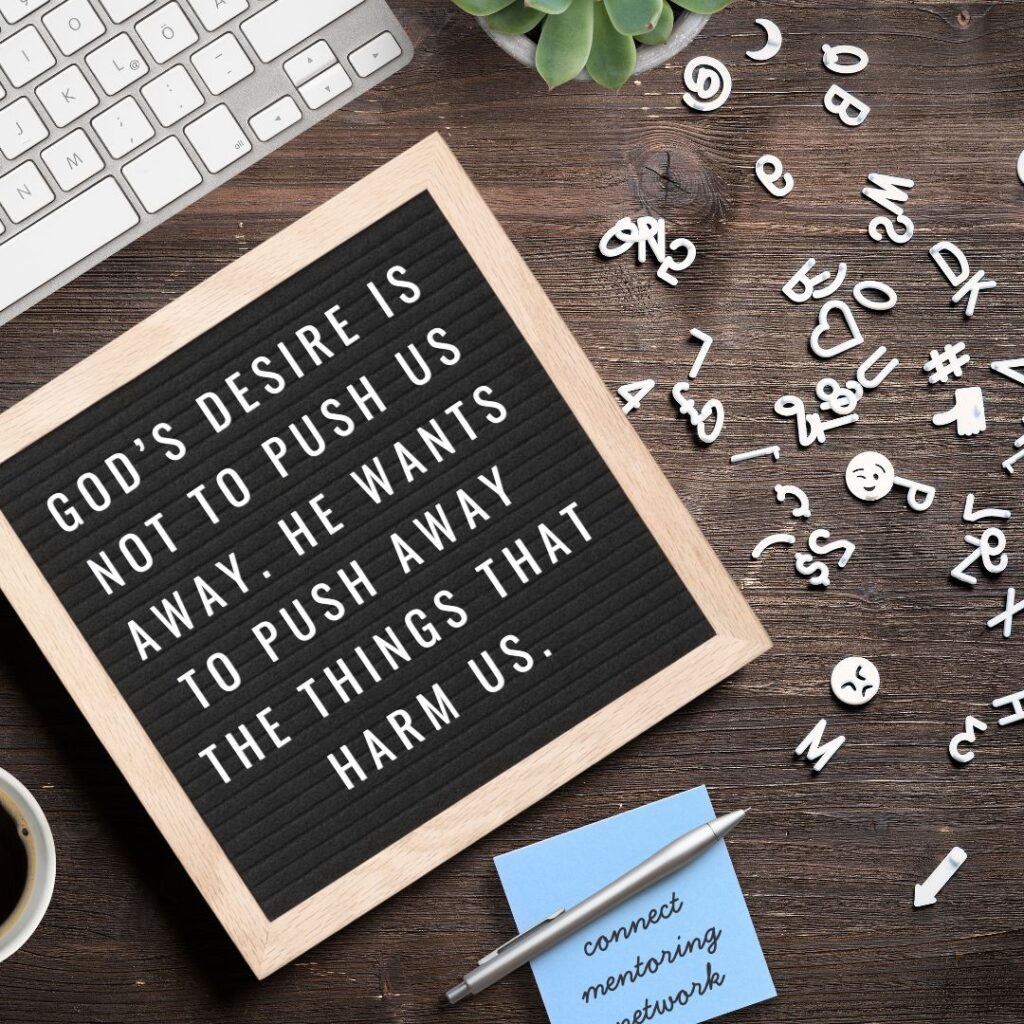
God’s desire is not to push us away. He wants to push away the things that harm us. His desire is to restore us.

He is never against us – He is for us.

Jesus Gets Angry When Sin Overshadows God’s Mercy

Sometimes people look at the Old Testament and wonder if God seems different from the God revealed through Jesus. But God’s character has never changed.

The same God who walked with Adam in the garden is the God who came near to us through Christ.

The same God who confronted sin is the God who offered forgiveness.

The same God who called His people back is the God who gave His Son.

When God revealed Himself to Moses, He described His own character: “The Lord, the Lord God, merciful and gracious, longsuffering, and abounding in goodness and truth, keeping mercy for thousands, forgiving iniquity and transgression and sin…” (Exodus 34:6-7)

Over and over throughout Scripture, God describes Himself as merciful, compassionate, patient, faithful, and loving:

“The Lord is gracious and full of compassion, slow to anger and great in mercy. The Lord is good to all, and His tender mercies are over all His works.” (Psalm 145:8-9)

“Through the Lord’s mercies we are not consumed, because His compassions fail not. They are new every morning; great is Your faithfulness.” (Lamentations 3:22-23)

“The Lord appeared to us in the past, saying: ‘I have loved you with an everlasting love; I have drawn you with unfailing kindness.’” (Jeremiah 31:3)

This is the heart of God.

Mercy.
Compassion.
Faithfulness.
Love.

Jesus Gets Angry When There’s a Roadblock Between Us and God

Let’s go back to the temple. people in the temple were not simply conducting business – they had created a substitute.

They were offering something temporary in place of something eternal. They were focused on what they could purchase instead of what they could receive from God.

The temple was supposed to be a place where people came to:

  • experience forgiveness
  • receive healing
  • encounter God’s presence
  • learn His ways
  • draw near to Him

Instead, they were distracted by something lesser: they were self-medicating in the presence of Jesus.

If we are honest, we do the same thing today.

Not because we are trying to rebel against God.

Sometimes because we are tired. Sometimes because we are overwhelmed. Sometimes because we are hurting.

We reach for things that temporarily comfort us: the endless scroll of social media, the need for approval, the pursuit of perfection.

Busyness.

Control.

Overfunctioning.

Avoidance.

Entertainment.

The things that help us forget for a moment.

None of these things are necessarily sinful by themselves. A cup of coffee, a favorite show, a hobby, or time with friends can all be gifts from God. But anything can become a substitute when we turn to it instead of turning to Him. 

Anything can become a roadblock when it keeps us from receiving what only God can provide.

What Is Jesus Turning Over in Your Life?

When Jesus cleared the temple, He was not destroying something good. He was restoring something holy. He was removing the things that prevented people from experiencing what they truly needed.

He still does that today. Please don’t understand: God’s correction is not rejection. His conviction is not condemnation. His desire is not to push us away. His desire is to draw us closer.

Romans 8:1 reminds us: “There is now no condemnation for those who are in Christ Jesus.” The God who corrects you is the God who loves you. The God who reveals what is broken is the God who heals. The God who asks you to surrender something is the God who knows what you need more than you do.

Perhaps today is a good day to ask a few questions:

Lord, what have I allowed to become a roadblock between You and me?

What am I reaching for instead of reaching for You?

What have I allowed to take the place that belongs only to You?

A prayer I have been praying recently is this:

“Lord, help me see how much I lose when I lose You. My perspective on my life and all of life becomes distorted when I don’t make space for You. When I allow other things to obscure Your love for me, remind me that Your love is better than life.”

May we become quiet enough to hear Him. May we become still enough to recognize His presence. May we allow Him to clear away whatever keeps us from the fullness of life found only in Him.

He is not against us. He is for us. The God who turns over tables is the same God who gave His life for us – and when we view why Jesus gets angry from that perspective, that anger begins to look a whole lot like love. 

If today’s reflection encouraged or challenged you, I’d love for you to continue the conversation with me on this week’s episode of the Connect Podcast – subscribe here so you don’t miss an episode. And if you’re longing to grow deeper in your walk with Christ while serving faithfully in ministry, I’d love to invite you to join the Connect Mentoring Network. Inside you’ll find biblical resources, on-demand courses, mentoring, a private community of women in ministry, and practical encouragement to help you lead from a place of health rather than exhaustion.

You don’t have to navigate ministry or life alone. I’d love to connect with you through the podcast and welcome you into the Connect Mentoring Network community as we pursue Christ together – and thanks for spending this time with me today! Talk to you soon!

The weekly blog is found here if you want to check it out!
Reflections vs Resolutions: An Invitation to Deeper Transformation in 2026

I have moved the blog to www.connectmentoringnetwork.org – but this is a personal one, thought I’d leave it here. Maybe you and I will visit from time to time at this site in 2026…. Let’s visit today, friend!

This year, what if we chose something deeper? Let’s take a look at reflections vs resolutions.

As we step into 2026, many of us feel the familiar pull of a new year—the clean slate, the fresh start, the pressure to decide who we will become in the next twelve months. I was ready to let go of 2025, and I’m excited for a new day in 2026 – check in here if you missed my last blog

If you are like me, “resolutions” seem to come to mind at the same time we think of a new year: goals to be thinner, stronger, more productive, more organized, more disciplined. While there is nothing inherently wrong with resolutions and goals that gear toward growth or intentionality, the danger is that our focus so easily drifts toward self-improvement while quietly neglecting soul formation.

reflections vs resolutions

Psalm 65:11 declares, “You crown the year with Your goodness, and Your paths drip with abundance.” This is not a picture of us striving to make the year good – it’s a picture of God Himself placing a crown of goodness upon it. The year ahead is not crowned by our resolve, our willpower, or our perfectly executed plans. It is crowned by the goodness of God. That truth invites us to begin the year not with pressure, but with trust. That truth may lead you to make reflections vs resolutions. 

Reflections vs Resolutions: 

Rather than asking, “What do I want to accomplish this year?” perhaps the better question for 2026 is, “Who am I becoming in Christ?”

Where have I been tempted to trust my own effort more than God’s goodness as I look ahead?

Scripture consistently calls us away from frantic striving and toward faithful abiding. In Isaiah 43:18–19, the Lord says,“Remember not the former things, nor consider the things of old. Behold, I am doing a new thing; now it springs forth, do you not perceive it?” God is not merely interested in helping us refine old patterns—He is inviting us into something new altogether. New depths of trust. New ways of walking with Him. New levels of surrender that cannot grow in soil cluttered by yesterday’s disappointments or successes.

However – perceiving the “new thing” God is doing requires space. Stillness. Souls that are not overcrowded by noise, hurry, and self-imposed expectations.

Reflections vs Resolutions: 

Rather than asking, “How can I improve on last year?” perhaps the better question for 2026 is, “Who am I becoming in Christ as He does something new in me?”

What former things might God be inviting me to release so I can perceive what He is doing now?

We live in a world that rewards hustle and measures worth by output. Even within Christian spaces, we can quietly absorb the belief that spiritual maturity is proven by how much we do for God. Yet Scripture reminds us that transformation flows from identity, not activity. “Therefore, if anyone is in Christ, he is a new creation. The old has passed away; behold, the new has come” (2 Corinthians 5:17).

This is not a future promise—it is a present reality. In Christ, we are already made new. Growth in the Christian life is not about earning a new identity, but learning to live from the one we have been given. When we forget this, our faith becomes performance-driven, and intimacy with God slowly gives way to pressure.

Reflections vs Resolutions: 

Rather than asking, “What spiritual habits should I add this year?” perhaps the better question for 2026 is, “Who am I becoming in Christ as I live from my new identity?”

Where might I be striving to prove my faith instead of resting in who I already am in Him?

Tending a soul is slow, intentional work. It looks like lingering in Scripture instead of rushing through a plan. It looks like prayer that is honest rather than polished. It looks like creating margin to listen, repent, trust, and return—again and again. Soul care is not flashy, but it is where intimacy with God is cultivated.

Jeremiah 29:11 reminds us, “For I know the plans I have for you, declares the Lord, plans for welfare and not for evil, to give you a future and a hope.” These words were spoken to people in exile—people living in the tension between promise and fulfillment. God’s good plans do not eliminate hardship, but they anchor us in hope and faithfulness while we wait.

Reflections vs Resolutions

Rather than asking, “How can I control what happens this year?” perhaps the better question for 2026 is, “Who am I becoming in Christ as I trust His plans?”

What would it look like to tend my soul instead of trying to manage every outcome?

As we enter 2026, many of us carry unseen burdens from the year behind us—losses, unanswered prayers, fatigue from doing all the “right things” without seeing fruit. Choosing intimacy with Christ does not ignore those realities, but it reframes them. Faithfulness is not measured by visible success, but by quiet obedience, daily surrender, and continued trust.

We can be confident of this: as we are faithful to God, He will surely be faithful to us. He always has been. He always will be.

Perhaps this year, we release the pressure to reinvent ourselves and instead choose abiding over striving. We choose depth over distraction. Faithfulness over frenzy. Formation over performance. Reflections vs resolutions.

May 2026 be a year crowned with His goodness. May your soul be tended with care. And may your greatest growth be found not in what you accomplish, but in who you are becoming in Christ. What a treasure that would be!

Let’s continue the conversation on the podcast! Join me on Thursday at 10:00 – subscribe here: https://www.youtube.com/@JenniferWSpivey

Want help achieving your resolutions in 2026? A new cohort is forming now at wwww.connectmentoringnetwork.org. All kinds of resources, all at your fingertips and all at your 

The Scared Steps that Build Our Faith

There’s a saying floating around in the self-help world: “Do it scared.”

It’s catchy. It’s inspiring. And it’s a whole lot easier said than done.

When fear shows up, our first instinct is often to stop, freeze, or retreat. We imagine that in order to move forward, we have to first get rid of the fear. Know this: fear isn’t always a stop sign. Fear can be an indicator that we’re stepping into something bigger than ourselves.

Almost every time God says “do not fear” in Scripture, He couples it with a promise of His presence:

  • “Do not fear, for I am with you; do not be dismayed, for I am your God.” (Isaiah 41:10)
  • “For I, the Lord your God, hold your right hand; it is I who say to you, ‘Fear not, I am the one who helps you.’” (Isaiah 41:13)
  • “Even though I walk through the valley of the shadow of death, I will fear no evil, for you are with me.” (Psalm 23:4)
  • “God is our refuge and strength, an ever-present help in trouble. Therefore we will not fear…” (Psalm 46:1–3)
  • “Do not be afraid of them; the Lord your God himself will fight for you.” (Deuteronomy 3:22)
  • “Be strong and courageous. Do not be afraid or terrified… for the Lord your God goes with you; He will never leave you nor forsake you.” (Deuteronomy 31:6)
  • “The Lord is my helper; I will not fear; what can man do to me?” (Hebrews 13:6)

We sometimes imagine fear as a weakness or a flaw, but Jesus understands fear intimately. Hebrews 4:15 reminds us that He experienced every emotion we do—without sin. He knows what it feels like to be pressed by uncertainty, threatened by danger, and pulled into the tension of “this is hard, but I must obey.” Fear is human.

Remember the Garden of Gethsemane? Jesus prayed in deep distress, fully aware of the suffering to come, and still He walked forward in obedience. That’s not the absence of fear—that’s courage grounded in the Father’s will.

Maybe “do it scared” isn’t about pushing through in our own strength while fear gnaws at the edges of our courage. Maybe it’s about doing it with fear… Not fear/scared but fear/confidence in the Lord. The kind of confidence that says, “Yes, my heart is racing, but my God is here. My knees might be shaking, but my Savior’s hand is holding mine. I may tremble, but His promises will not.”

Vulnerable moment: I get scared sometimes. I can be full of faith and still feel the thump of anxiety in my chest. (Okay, to be really honest – I feel it in my stomach – that kind of dropping, didn’t finish my homework, might throw up kind of feeling). I’ve learned that I can hold fear and faith together, the way I’ve held joy and grief at the same time. Sometimes I can switch from fear scared to fear confident in the Lord as quickly as flipping off a light. Fortunately, when the light in my soul flickers off, the Holy Spirit is there to switch it back on. Every time.

The Holy Spirit doesn’t shame us for feeling fear. He simply displays the truth again and again—reminding us of God’s promises, steadying our breath, whispering the courage of Scripture into our hearts. In that light that He switched back on for me, I can do anything He’s called me to do. Not because fear is gone, but because His presence is greater.

And you can, too.

When David wrote Psalm 23:4—“Even though I walk through the valley of the shadow of death, I will fear no evil”—he didn’t deny that the valley existed. He didn’t minimize the shadows. He simply placed the reality of God’s presence above the reality of danger.

That’s what “do it scared” looks like for a believer: not blind bravado, not pretending fear doesn’t exist, but taking the next step because the Lord is with us.

Every time we take that step, something happens: fear loses just a little more of its grip. Faith grows a little stronger. We start to see God’s fingerprints not just on the moments when we felt brave, but on the trembling moments when we leaned on Him most.

If you’re standing at the edge of something right now—something that feels risky, uncomfortable, or overwhelming—here’s a prayer for you:

Lord, You know my fears. You know how my heart races when I think about what lies ahead. Thank You for the reminder that You never leave my side. Give me courage to take the next step, not because I feel strong, but because You are my strength. Let Your presence be more real to me than my fear. In Jesus’ name, amen.

You don’t have to wait until you “feel” ready. You don’t have to wait for the fear to disappear. If God has called you, He’s already promised to go with you. Take the step. Make the call. Start the project. Have the conversation. You aren’t alone, and moving forward in the knowledge that God has you on every side is a treasure ❤